Activating self-awareness leads to better emotional management, improved communication, stronger relationships, more effective decision-making, increased confidence, greater personal happiness, and enhanced career success by helping you understand your strengths, weaknesses, emotions, and patterns of behavior.

Tag: Case Study (Page 4 of 8)

Case Study 201: More Peace and Calm being experiences when living a life connected to Self-awareness

Case Study 201

More Peace and Calm Experienced When Living a Life Connected to Self-Awareness


Context

Case Study 201 involves an individual who described a long-standing sense of internal pressure and emotional fatigue. Although life was relatively organised and functional on the surface, the individual reported feeling mentally busy, easily overwhelmed, and rarely fully at ease.

Calm was experienced only occasionally and was often dependent on external conditions such as time off, solitude, or the absence of demands.


Initial Patterns

Through early self-awareness exploration, several habitual patterns became visible:

  • Continuous internal commentary and mental replay

  • A tendency to anticipate problems before they arose

  • Emotional tension linked to self-expectation

  • Difficulty being present without monitoring performance

These patterns were familiar and automatic, operating largely outside conscious awareness.


Self-Awareness Practice

The work focused on noticing inner activity without attempting to manage or improve it.

Key practices included:

  • Observing thoughts as passing mental events

  • Becoming aware of bodily tension during ordinary moments

  • Allowing emotions to be present without analysis

  • Gently returning attention to the present experience

The emphasis remained on understanding, not correction.


Shift in Experience

As awareness increased, the individual began to notice:

  • Tension often arose without external cause

  • Mental activity reduced when it was simply observed

  • Emotional reactions softened more quickly

  • The body relaxed naturally when effort dropped

Peace began to appear in small, ordinary moments rather than special circumstances.


Outcome

Over time, the individual experienced:

  • A consistent sense of inner calm

  • Reduced emotional reactivity

  • Greater clarity and presence

  • Increased ease in relationships and daily tasks

  • A nervous system that could settle without force

Calm became less dependent on conditions and more accessible in daily life.


Key Insight

The individual recognised:

Calm was not something to achieve —
it was what remained when unconscious activity was no longer running the system.

Self-awareness allowed inner tension to unwind naturally.


Conclusion

Case Study 201 demonstrates that peace and calm are not created through control, effort, or avoidance, but through awareness.

By living in connection with self-awareness, unconscious patterns lose their influence, emotional intensity softens, and the nervous system begins to regulate itself.

This case reinforces the principle that self-awareness is not a technique for calm — it is the context in which calm naturally arises.
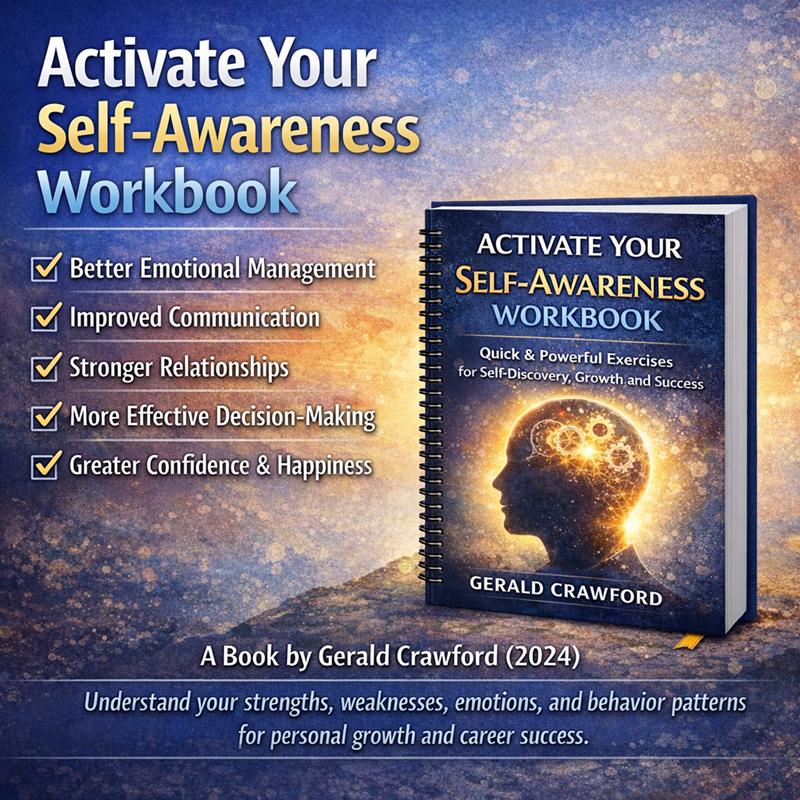

Case Study 401: Applying Self-awareness Workbook Information in a Teaching and Education Model

Case Study 401: Applying Activate Your Self-awareness Workbook in a Teaching and Education Model
Gerald Crawford (2024)


Student Overview

Name: Liam K. (Pseudonym)
Age: 16
Context: High School Student
Primary Challenges: Lack of focus, low motivation, poor emotional regulation, academic inconsistency

Liam was described by his teachers as intelligent but disengaged. He struggled to stay focused, often procrastinated, and reacted emotionally to academic pressure.


Presenting Problems

  • Difficulty concentrating in class
  • Low motivation toward schoolwork
  • Emotional reactions to feedback and failure
  • Inconsistent academic performance
  • Negative self-beliefs about ability

Liam shared:
“I try sometimes, but I just lose focus or feel like it’s pointless.”


Educational Model Framework

This case applied Activate Your Self-awareness Workbook within a 4-phase teaching and education model:

1. Awareness (Self-Observation)

  • Helping students identify thoughts, emotions, and behaviours
  • Increasing awareness of learning patterns and habits

2. Understanding (Emotional & Cognitive Insight)

  • Exploring how emotions affect learning
  • Identifying beliefs about ability and success

3. Regulation (Emotional & Behavioural Control)

  • Teaching strategies to manage emotions and focus
  • Developing discipline and consistency

4. Application (Academic Integration)

  • Applying awareness to study habits and classroom behaviour
  • Building self-directed learning skills

Intervention Process

Phase 1: Awareness Activation

Liam began tracking his daily behaviour and focus levels.

Tools Used:

  • Simple daily reflection sheets
  • Focus tracking during study sessions
  • Emotional check-ins before and after class

Breakthrough:
“I didn’t realize how easily I get distracted until I started noticing it.”


Phase 2: Understanding Learning Patterns

Liam explored how his emotions and beliefs affected his performance.

Discoveries:

  • Fear of failure led to avoidance
  • Belief: “I’m not good at school”
  • Frustration triggered disengagement

Insight:
“I give up before I really try because I think I’ll fail.”


Phase 3: Emotional & Behavioural Regulation

Liam learned strategies to manage focus and emotions.

Practices:

  • Breaking tasks into smaller steps
  • Pausing and resetting when frustrated
  • Using positive self-talk

Shift:
“I can actually get back on track when I lose focus.”


Phase 4: Academic Application

Liam applied self-awareness to his studies.

Actions:

  • Setting daily academic goals
  • Monitoring progress and focus
  • Reflecting on performance

Outcome:
“I feel more in control of how I study and learn.”


Transformation Timeline

Week 1–2: Awareness

Liam recognized distraction and emotional patterns.

Week 3–4: Understanding

He identified beliefs and emotions affecting learning.

Week 5–6: Regulation

He developed tools to manage focus and frustration.

Week 7–8: Application

He applied awareness to improve academic performance.


Outcomes & Results

Academic Improvements

  • Increased focus and engagement
  • More consistent study habits
  • Improved performance in key subjects

Emotional Growth

  • Better management of frustration and stress
  • Increased confidence in learning ability

Behavioural Changes

  • Reduced procrastination
  • Greater accountability and discipline

Personal Development

  • Stronger self-awareness
  • More positive self-beliefs

Student Reflection

“I used to think I just couldn’t focus. Now I know how my mind works—and I can actually change it.”


Key Insight

When students understand how their thoughts and emotions influence learning, they gain the power to improve both performance and confidence.


Conclusion

This case study demonstrates how Activate Your Self-awareness Workbook can be effectively integrated into an educational model to support both academic success and personal development.

By developing self-awareness, Liam transitioned from disengagement and self-doubt to focus, confidence, and intentional learning.


Application

This model is highly effective for:

  • Schools and educational institutions
  • Student coaching and mentoring programs
  • Academic performance improvement strategies
  • Emotional intelligence development in education

Final Thought:
Education is not just about gaining knowledge—it’s about understanding yourself as a learner.

« Older posts Newer posts »

Step-up and get your seat on my VIP Activate Your Self-awareness Mentorship Program for 2026

X
Back a Buddy Show your Support