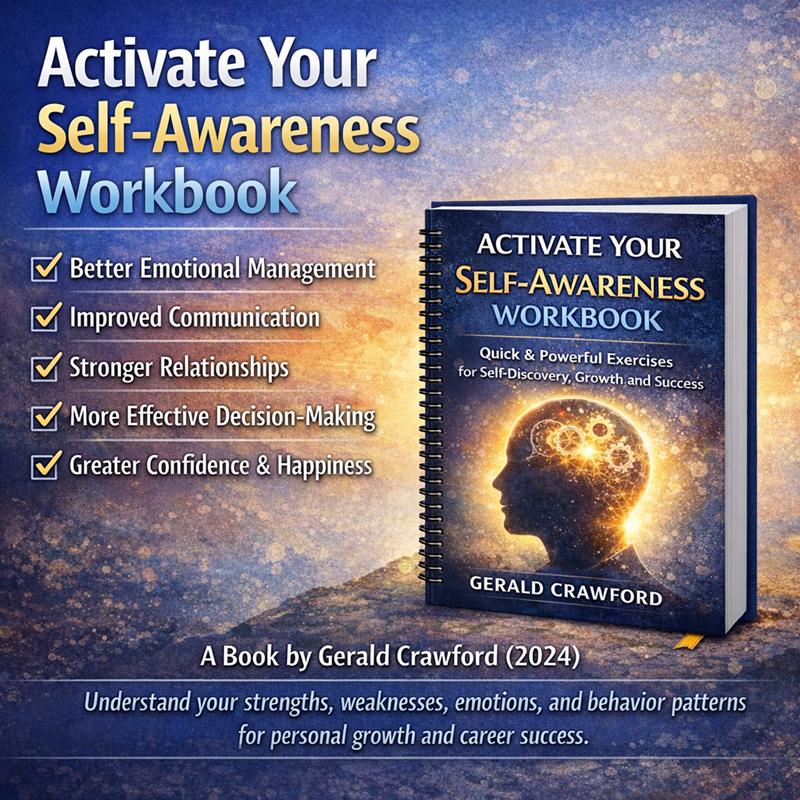
Activating self-awareness leads to better emotional management, improved communication, stronger relationships, more effective decision-making, increased confidence, greater personal happiness, and enhanced career success by helping you understand your strengths, weaknesses, emotions, and patterns of behavior.

Category: Case Study (Page 5 of 8)

Case Study 401: Applying Self-awareness Workbook Information in a Teaching and Education Model

Case Study 401: Applying Activate Your Self-awareness Workbook in a Teaching and Education Model
Gerald Crawford (2024)


Student Overview

Name: Liam K. (Pseudonym)
Age: 16
Context: High School Student
Primary Challenges: Lack of focus, low motivation, poor emotional regulation, academic inconsistency

Liam was described by his teachers as intelligent but disengaged. He struggled to stay focused, often procrastinated, and reacted emotionally to academic pressure.


Presenting Problems

  • Difficulty concentrating in class
  • Low motivation toward schoolwork
  • Emotional reactions to feedback and failure
  • Inconsistent academic performance
  • Negative self-beliefs about ability

Liam shared:
“I try sometimes, but I just lose focus or feel like it’s pointless.”


Educational Model Framework

This case applied Activate Your Self-awareness Workbook within a 4-phase teaching and education model:

1. Awareness (Self-Observation)

  • Helping students identify thoughts, emotions, and behaviours
  • Increasing awareness of learning patterns and habits

2. Understanding (Emotional & Cognitive Insight)

  • Exploring how emotions affect learning
  • Identifying beliefs about ability and success

3. Regulation (Emotional & Behavioural Control)

  • Teaching strategies to manage emotions and focus
  • Developing discipline and consistency

4. Application (Academic Integration)

  • Applying awareness to study habits and classroom behaviour
  • Building self-directed learning skills

Intervention Process

Phase 1: Awareness Activation

Liam began tracking his daily behaviour and focus levels.

Tools Used:

  • Simple daily reflection sheets
  • Focus tracking during study sessions
  • Emotional check-ins before and after class

Breakthrough:
“I didn’t realize how easily I get distracted until I started noticing it.”


Phase 2: Understanding Learning Patterns

Liam explored how his emotions and beliefs affected his performance.

Discoveries:

  • Fear of failure led to avoidance
  • Belief: “I’m not good at school”
  • Frustration triggered disengagement

Insight:
“I give up before I really try because I think I’ll fail.”


Phase 3: Emotional & Behavioural Regulation

Liam learned strategies to manage focus and emotions.

Practices:

  • Breaking tasks into smaller steps
  • Pausing and resetting when frustrated
  • Using positive self-talk

Shift:
“I can actually get back on track when I lose focus.”


Phase 4: Academic Application

Liam applied self-awareness to his studies.

Actions:

  • Setting daily academic goals
  • Monitoring progress and focus
  • Reflecting on performance

Outcome:
“I feel more in control of how I study and learn.”


Transformation Timeline

Week 1–2: Awareness

Liam recognized distraction and emotional patterns.

Week 3–4: Understanding

He identified beliefs and emotions affecting learning.

Week 5–6: Regulation

He developed tools to manage focus and frustration.

Week 7–8: Application

He applied awareness to improve academic performance.


Outcomes & Results

Academic Improvements

  • Increased focus and engagement
  • More consistent study habits
  • Improved performance in key subjects

Emotional Growth

  • Better management of frustration and stress
  • Increased confidence in learning ability

Behavioural Changes

  • Reduced procrastination
  • Greater accountability and discipline

Personal Development

  • Stronger self-awareness
  • More positive self-beliefs

Student Reflection

“I used to think I just couldn’t focus. Now I know how my mind works—and I can actually change it.”


Key Insight

When students understand how their thoughts and emotions influence learning, they gain the power to improve both performance and confidence.


Conclusion

This case study demonstrates how Activate Your Self-awareness Workbook can be effectively integrated into an educational model to support both academic success and personal development.

By developing self-awareness, Liam transitioned from disengagement and self-doubt to focus, confidence, and intentional learning.


Application

This model is highly effective for:

  • Schools and educational institutions
  • Student coaching and mentoring programs
  • Academic performance improvement strategies
  • Emotional intelligence development in education

Final Thought:
Education is not just about gaining knowledge—it’s about understanding yourself as a learner.

Case Study 503: Applying Activate Your Self-awareness Workbook Information in a Healing Therapy Model with Hypnotherapy

Case Study 503: Applying Activate Your Self-awareness Workbook in a Healing Therapy Model with Hypnotherapy
Gerald Crawford (2024)


Client Overview

Name: Natalie V. (Pseudonym)
Age: 33
Profession: Creative Designer
Primary Challenges: Low self-worth, fear of judgment, procrastination, creative blocks, anxiety

Natalie described feeling “capable but stuck,” often delaying important work due to fear of not being good enough.


Presenting Problems

  • Chronic procrastination
  • Fear of criticism and rejection
  • Low confidence in her abilities
  • Creative blocks and inconsistency
  • Anxiety linked to performance

Natalie shared:
“I have ideas, but I hold myself back because I’m afraid they’re not good enough.”


Therapeutic Model Framework

This case integrates Activate Your Self-awareness Workbook with Hypnotherapy into a 5-phase healing model:

1. Conscious Awareness (Pattern Recognition)

  • Identifying procrastination triggers
  • Recognizing self-doubt and avoidance patterns

2. Subconscious Exploration (Root Belief Discovery)

  • Accessing early experiences linked to self-worth
  • Identifying internalized criticism

3. Emotional Release (Hypnotic Processing)

  • Releasing stored fear and shame
  • Processing past experiences safely

4. Subconscious Reprogramming (Empowerment Installation)

  • Installing confidence-based beliefs
  • Reinforcing creative self-expression

5. Integration (Aligned Action)

  • Applying awareness and new beliefs through consistent action
  • Building discipline and confidence

Intervention Process

Phase 1: Self-Awareness Activation

Natalie began tracking her avoidance patterns.

Tools Used:

  • Daily journaling
  • Task avoidance tracking
  • Emotional check-ins

Breakthrough:
“I noticed I don’t procrastinate because I’m lazy—it’s because I’m afraid.”


Phase 2: Hypnotherapy – Subconscious Exploration

Through hypnotherapy, Natalie accessed deeper beliefs.

Discoveries:

  • Early criticism shaping self-perception
  • Fear of judgment and rejection
  • Belief: “I’m not good enough”

Insight:
“This fear has been with me for a long time—it’s not just about my work.”


Phase 3: Emotional Release

Natalie released emotional blocks tied to past experiences.

Process:

  • Reprocessing memories in a safe state
  • Letting go of shame and fear

Shift:
“I felt freer—like I didn’t have to carry that fear anymore.”


Phase 4: Subconscious Reprogramming

New empowering beliefs were introduced.

Old Beliefs:

  • “I’m not good enough”
  • “I will be judged”

New Beliefs Installed:

  • “My work has value”
  • “I am confident in expressing myself”
  • “Growth comes through action”

Phase 5: Integration & Action

Natalie began applying consistent, intentional action.

Actions:

  • Setting small, achievable creative goals
  • Taking action despite fear
  • Reinforcing positive self-talk

Outcome:
“I’m creating again—and finishing what I start.”


Transformation Timeline

Week 1–2: Awareness

Natalie identified patterns of procrastination and fear.

Week 3–4: Subconscious Exploration

She uncovered root beliefs affecting her confidence.

Week 5–6: Emotional Release

She released emotional blocks linked to past experiences.

Week 7–8: Reprogramming

She developed new confidence-based beliefs.

Week 9–10: Integration

She consistently applied action and built momentum.


Outcomes & Results

Emotional Transformation

  • Reduced anxiety and fear of judgment
  • Increased emotional freedom

Cognitive Shifts

  • Improved self-belief
  • Reduced negative self-talk

Behavioural Changes

  • Decreased procrastination
  • Increased consistency and productivity

Creative Impact

  • Renewed creative flow
  • Greater confidence in expressing ideas

Client Reflection

“I used to wait until I felt ready—now I understand that taking action creates confidence.”


Key Insight

Procrastination is often rooted in fear—when the subconscious is aligned, action becomes natural.


Conclusion

This case study demonstrates how integrating Activate Your Self-awareness Workbook with hypnotherapy can effectively address procrastination, self-doubt, and creative blocks.

By combining conscious awareness with subconscious transformation, Natalie shifted from fear-based avoidance to confident, consistent action.


Application

This integrated model is effective for:

  • Procrastination and performance anxiety
  • Creative blocks and self-expression challenges
  • Confidence and self-worth development
  • Coaching, creative, and entrepreneurial programs

Final Thought:
When you release the fear within and align your beliefs with your potential, you stop waiting—and start creating.

« Older posts Newer posts »

Step-up and get your seat on my VIP Activate Your Self-awareness Mentorship Program for 2026

X
Back a Buddy Show your Support