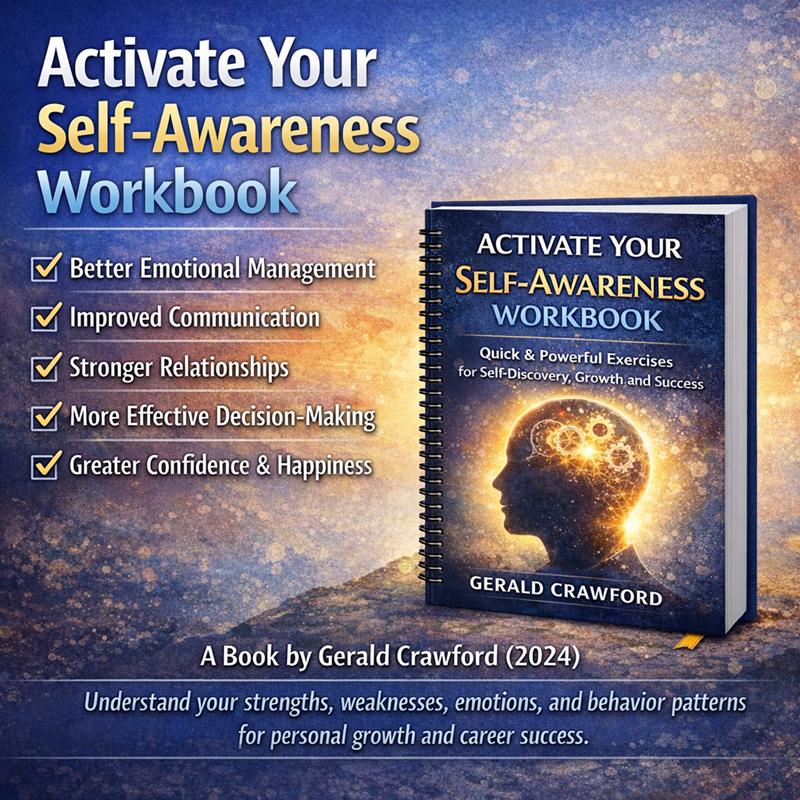
Activating self-awareness leads to better emotional management, improved communication, stronger relationships, more effective decision-making, increased confidence, greater personal happiness, and enhanced career success by helping you understand your strengths, weaknesses, emotions, and patterns of behavior.

Category: Case Study (Page 3 of 8)

Case Study 204: More Peace and Calm being experiences when living a life connected to Self-awareness

Case Study 204

More Peace and Calm Experienced When Living a Life Connected to Self-Awareness


Context

Case Study 204 focuses on an individual who reported a persistent lack of inner calm. Although their external life was relatively stable, their internal experience was characterised by constant mental activity, emotional tension, and difficulty fully relaxing.

They described:

  • A busy, overactive mind

  • Ongoing low-level anxiety or unease

  • Emotional reactivity in everyday situations

  • A sense of always being “on” or internally alert

This state had become normalised, and the individual initially believed that calm was something that would only arrive once external circumstances improved.


Initial Awareness

Through self-awareness practices, the individual began observing their internal state rather than trying to change it.

What became apparent was that:

  • Tension was present even in neutral situations

  • Emotional responses often occurred automatically

  • Thoughts frequently moved into anticipation or self-monitoring

  • The nervous system remained activated without immediate threat

These patterns had been operating largely outside conscious awareness.


Self-Awareness Practice

The focus of the work was observation without judgment.

Key elements included:

  • Noticing bodily tension as it arose

  • Observing thoughts without following or correcting them

  • Naming emotions instead of suppressing them

  • Allowing internal experiences to be present

No techniques were used to force relaxation or positivity.
The emphasis remained on seeing clearly rather than fixing.


Shift in Experience

As awareness increased, the individual noticed subtle but consistent changes:

  • Emotional reactions softened more quickly

  • Mental noise reduced without effort

  • The body began to relax naturally

  • There was more space between stimulus and response

Calm was no longer something to achieve — it appeared when resistance decreased.


Outcome

Over time, the individual experienced:

  • A stable sense of inner peace

  • Greater emotional balance

  • Reduced reactivity in relationships

  • Increased presence in daily life

  • A nervous system that could settle more easily

Peace and calm became internal states rather than conditions dependent on circumstances.


Core Insight

The most significant realisation was:

Calm is not created through control or effort.
It emerges when unconscious inner activity becomes conscious.

Self-awareness allowed the nervous system to regulate itself naturally.


Conclusion

Case Study 204 demonstrates that living a life connected to self-awareness fundamentally changes the inner experience.

By bringing habitual patterns, emotions, and reactions into awareness:

  • Inner tension reduces

  • Emotional intensity softens

  • Calm becomes accessible in everyday life

This case illustrates that peace is not something to be added, but something that remains when unconscious activity is no longer running the system.

Case Study 203: More Peace and Calm being experiences when living a life connected to Self-awareness

Case Study 203

More Peace and Calm Experienced When Living a Life Connected to Self-Awareness


Context

Case Study 203 involves an individual who experienced frequent inner restlessness and emotional strain despite appearing functional and capable in daily life. They described feeling mentally busy, easily overstimulated, and rarely fully present.

Although there were no major external stressors, the individual reported a constant sense of internal pressure and difficulty accessing genuine calm.


Initial Observation

Through self-awareness inquiry, it became evident that the individual’s nervous system was operating in a habitual state of alertness.

Key observations included:

  • Persistent mental planning and self-monitoring

  • Emotional responses arising before conscious thought

  • A tendency to stay focused on what might go wrong

  • Difficulty resting without feeling unproductive or uneasy

These patterns were long-standing and largely unconscious.


Self-Awareness Practice

The individual engaged in simple, consistent self-awareness practices focused on noticing rather than changing.

This included:

  • Observing thoughts as mental activity rather than facts

  • Noticing bodily tension during everyday moments

  • Allowing emotions to be present without suppression

  • Gently returning attention to the present moment

No effort was made to induce calm or eliminate thoughts.


Shift in Awareness

As awareness deepened, the individual began to recognise that:

  • Tension often existed without a clear cause

  • Calm was already present beneath mental activity

  • Reactivity decreased when emotions were noticed early

  • The body naturally relaxed when attention softened

Peace emerged spontaneously when internal resistance dropped.


Outcome

Over time, the individual reported:

  • A noticeable increase in inner calm

  • Reduced emotional reactivity

  • Improved ability to pause before responding

  • Greater presence and clarity in daily life

  • A nervous system that could settle more easily

Calm became a stable background experience rather than a temporary state.


Key Insight

The individual recognised:

Peace was never missing — it was obscured by unconscious mental activity.

By bringing awareness to habitual patterns, the nervous system no longer needed to remain on constant alert.


Conclusion

Case Study 203 demonstrates that peace and calm arise naturally when life is lived in connection with self-awareness.

Rather than forcing relaxation or controlling thoughts, awareness allowed unconscious activity to soften, leading to emotional steadiness and inner ease.

This case reinforces the principle that self-awareness is not a technique for calm, but the condition in which calm appears.

« Older posts Newer posts »

Step-up and get your seat on my VIP Activate Your Self-awareness Mentorship Program for 2026

X
Back a Buddy Show your Support