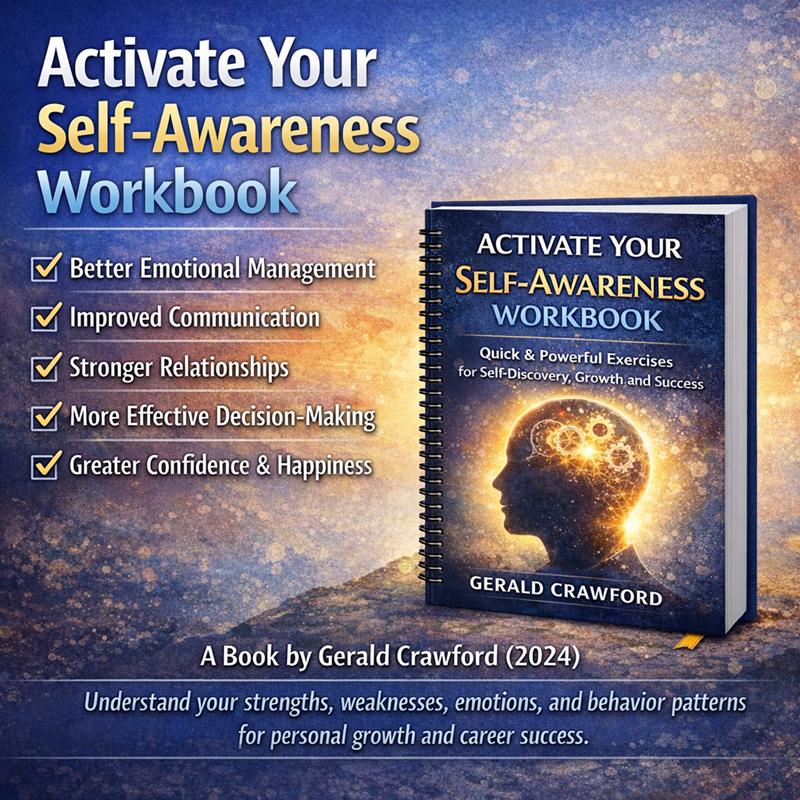
Case Study 303: Applying Activate Your Self-awareness Workbook in a Healing Therapy Model
Gerald Crawford (2024)
Client Overview
Name: Aisha N. (Pseudonym)
Age: 36
Profession: Healthcare Professional
Primary Challenges: Compassion fatigue, emotional exhaustion, anxiety, difficulty separating work from personal life
Aisha described feeling “emotionally drained and overwhelmed,” often carrying the weight of others’ pain long after her workday ended.
Presenting Problems
- Emotional burnout and fatigue
- Anxiety and difficulty switching off
- Over-identification with others’ emotions
- Lack of personal boundaries
- Reduced sense of self and inner calm
Aisha shared:
“I care deeply about people, but it feels like I’m losing myself in the process.”
Therapeutic Model Framework
This case applied Activate Your Self-awareness Workbook within a 4-phase healing therapy model:
1. Awareness (Observation & Identification)
- Recognizing emotional patterns and triggers
- Differentiating between self and others’ emotions
2. Emotional Separation (Ownership & Boundaries)
- Identifying emotional boundaries
- Understanding what belongs to self vs. others
3. Cognitive Reframing (Belief Transformation)
- Challenging beliefs around responsibility and care
- Developing healthier perspectives on helping others
4. Integration (Sustainable Emotional Balance)
- Applying boundaries consistently
- Practicing self-care and emotional regulation
Intervention Process
Phase 1: Awareness Activation
Aisha began tracking her emotional states throughout the day.
Tools Used:
- Emotional journaling
- Trigger mapping
- Daily awareness check-ins
Breakthrough:
“I realized I was absorbing emotions that weren’t mine.”
Phase 2: Emotional Separation
Aisha learned to distinguish her emotions from others’.
Practices:
- Asking: “Is this mine or someone else’s?”
- Visualizing emotional boundaries
- Practicing detachment with compassion
Shift:
“I can care without carrying everything.”
Phase 3: Cognitive Reframing
Aisha challenged her beliefs about responsibility.
Old Belief:
“If I don’t carry this, I’m not caring enough.”
New Belief:
“I can support others without sacrificing my well-being.”
Phase 4: Integration & Balance
Aisha implemented consistent emotional boundaries and self-care.
Actions:
- Creating end-of-day emotional release rituals
- Setting limits in professional and personal interactions
- Prioritizing rest and recovery
Outcome:
“I feel lighter, calmer, and more in control of my emotional space.”
Transformation Timeline
Week 1–2: Awareness
Aisha identified emotional overload and lack of boundaries.
Week 3–4: Separation
She began distinguishing her emotions from others’.
Week 5–6: Reframing
She shifted beliefs around responsibility and care.
Week 7–8: Integration
She established sustainable emotional boundaries and routines.
Outcomes & Results
Emotional Transformation
- Reduced emotional exhaustion and anxiety
- Increased emotional clarity and balance
Mental Well-being
- Greater calm and reduced overwhelm
- Improved ability to switch off after work
Behavioural Changes
- Stronger emotional boundaries
- More intentional self-care practices
Professional Impact
- Increased effectiveness without burnout
- More sustainable approach to helping others
Client Reflection
“I used to think being strong meant carrying everything. Now I understand that true strength is knowing what is mine to carry—and what is not.”
Key Insight
You can care deeply without absorbing everything—awareness creates healthy emotional boundaries.
Conclusion
This case study highlights how Activate Your Self-awareness Workbook can be applied within a healing therapy model to address compassion fatigue and emotional burnout.
Through awareness, emotional separation, reframing, and integration, Aisha transitioned from emotional overwhelm to balanced, sustainable care—both for others and herself.
Application
This model is especially effective for:
- Healthcare and caregiving professionals
- Burnout and compassion fatigue recovery
- Emotional intelligence and resilience training
- Coaching and therapeutic practices
Final Thought:
When you learn to separate your emotions from the emotions of others, you protect your peace without losing your compassion.



Leave a Reply