Case Study 301: Applying Activate Your Self-awareness Workbook in a Healing Therapy Model
Gerald Crawford (2024)
Client Overview
Name: Lisa P. (Pseudonym)
Age: 34
Profession: Teacher
Primary Challenges: Anxiety, low self-worth, emotional overwhelm, negative thought patterns
Lisa described feeling “stuck in cycles” of anxiety and self-doubt, often overwhelmed by her emotions and unable to break free from recurring negative patterns.
Presenting Problems
- Persistent anxiety and overthinking
- Low confidence and self-worth
- Emotional reactivity
- Negative self-talk
- Difficulty managing stress
Lisa shared:
“I know I want to change, but I don’t know how to stop the patterns.”
Therapeutic Model Framework
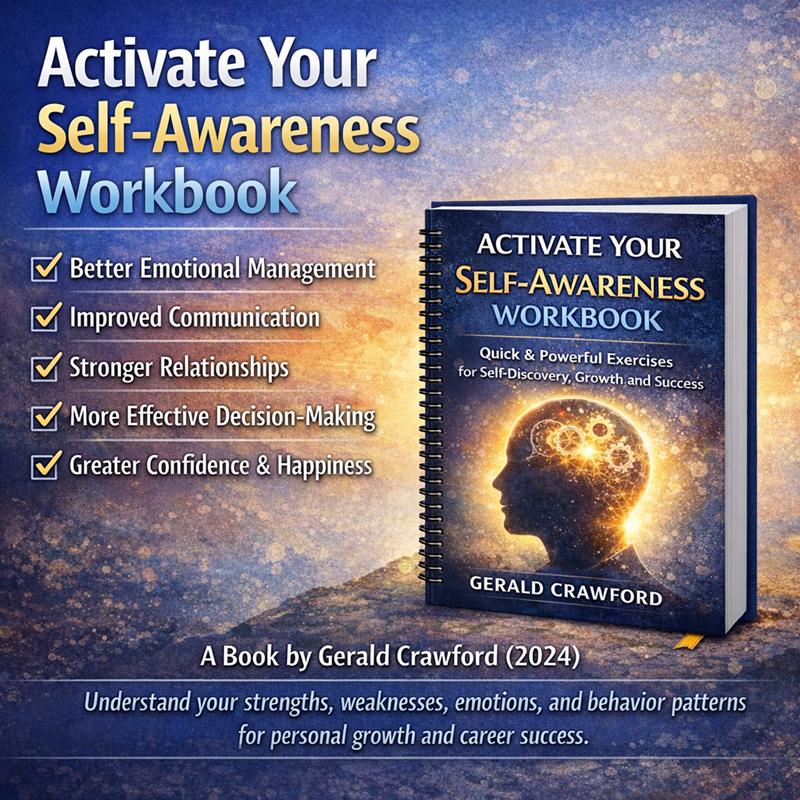
This case study integrates Activate Your Self-awareness Workbook into a structured healing therapy model, combining:
1. Awareness (Foundation Phase)
- Identifying thoughts, emotions, and behaviours
- Recognizing patterns and triggers
- Building non-judgmental observation
2. Understanding (Insight Phase)
- Exploring root beliefs and emotional drivers
- Connecting past experiences to present behaviour
- Increasing emotional intelligence
3. Reframing (Transformation Phase)
- Challenging limiting beliefs
- Rewriting internal narratives
- Developing empowering perspectives
4. Integration (Application Phase)
- Practicing new behaviours
- Strengthening emotional regulation
- Creating consistent habits
Intervention Process
Phase 1: Self-Awareness Activation
Lisa began daily journaling and emotional tracking.
Tools Used:
- Morning and evening reflections
- Emotional labeling exercises
- Trigger identification
Outcome:
“I started seeing patterns I never noticed before.”
Phase 2: Emotional Insight & Understanding
Lisa explored the deeper causes of her anxiety.
Discoveries:
- Fear of failure rooted in childhood expectations
- Perfectionism driving stress and self-criticism
- Belief: “I am not good enough”
Outcome:
“It wasn’t just anxiety—it was how I saw myself.”
Phase 3: Cognitive & Emotional Reframing
Lisa began transforming her internal dialogue.
Practices:
- Challenging negative thoughts
- Replacing self-criticism with self-compassion
- Building empowering beliefs
Shift:
From: “I will fail”
To: “I am learning and growing”
Phase 4: Behavioural Integration
Lisa applied awareness in real-life situations.
Actions:
- Pausing before reacting
- Responding consciously to stress
- Practicing daily self-reflection
Outcome:
“I felt more in control—not of everything, but of myself.”
Transformation Timeline
Week 1–2: Awareness
Lisa identified recurring emotional and thought patterns.
Week 3–4: Insight
She connected her current struggles to deeper beliefs.
Week 5–6: Reframing
She began shifting her internal narrative.
Week 7–8: Integration
She consistently applied new behaviours and responses.
Outcomes & Results
Emotional Transformation
- Reduced anxiety and overwhelm
- Increased emotional awareness and stability
Cognitive Shifts
- Healthier thought patterns
- Reduced negative self-talk
Behavioural Changes
- More intentional responses
- Improved stress management
Self-Perception
- Increased confidence and self-worth
- Stronger sense of identity
Client Reflection
“This process helped me understand myself instead of fighting myself. Once I became aware, everything started to change.”
Key Insight
Healing is not about fixing yourself—it’s about understanding yourself deeply enough to create conscious change.
Conclusion
This case study demonstrates how Activate Your Self-awareness Workbook can be effectively integrated into a healing therapy model, guiding individuals through awareness, understanding, reframing, and integration.
By addressing the root causes of thoughts, emotions, and behaviours, Lisa moved from anxiety and self-doubt to clarity, confidence, and emotional balance.
Application
This model can be used for:
- Hypnotherapy and coaching frameworks
- Emotional healing programs
- Self-development workshops
- Clinical and non-clinical therapeutic settings
Final Thought:
When awareness becomes the foundation of healing, transformation is not forced—it unfolds naturally.



Leave a Reply