Module 3 is where the work moves from the head into the body, and it’s a turning point for many learners.
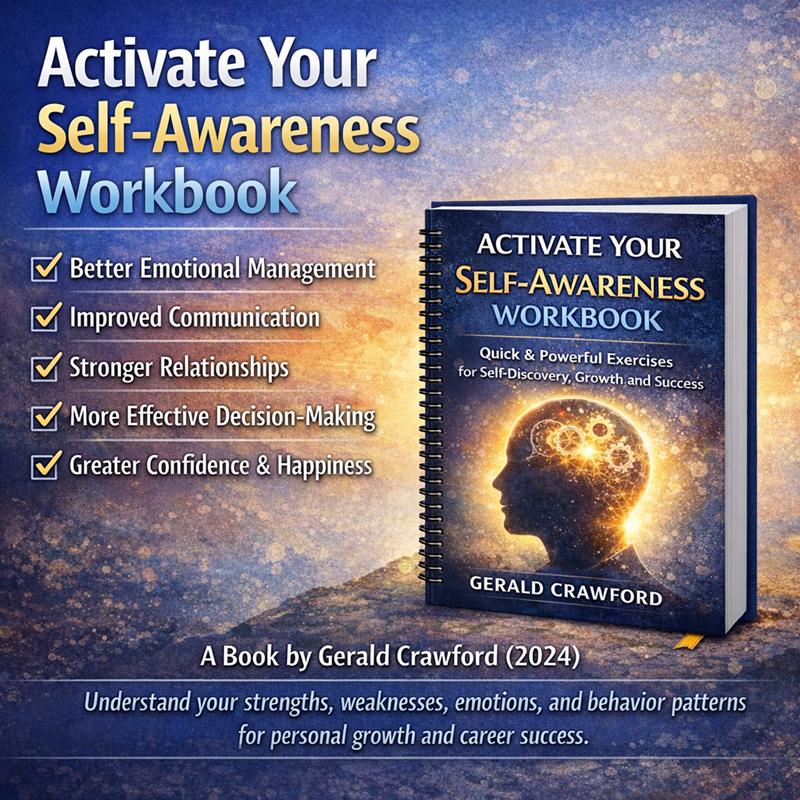
Below is Module 3 fully expanded, facilitator-ready, and consistent with Modules 1 & 2, aligned with the EFT Teaching & Education Model and Activate Your Self-awareness Workbook.
Self-awareness Teaching and Education Model (EFT Model)
Module 3 (3 of 14): Emotional Awareness & Regulation
Theme
Feeling without suppression
Purpose of Module 3
If Module 1 taught how to notice,
and Module 2 taught how to observe thoughts,
Module 3 teaches learners how to feel emotions safely without becoming overwhelmed.
This module gently corrects a common misunderstanding:
Emotional regulation does not mean controlling or suppressing emotions.
It means being able to feel emotions without being consumed by them.
Learning Focus (Expanded)
1. Naming Emotions Accurately
Learners are introduced to emotional literacy — the ability to identify and name emotions precisely.
They explore the difference between:
-
Primary emotions (sadness, fear, anger, joy)
-
Secondary emotions (shame, guilt, frustration, resentment)
Key teaching points:
-
Emotions are signals, not problems
-
What we can name, we can regulate
-
Vague emotions feel overwhelming; named emotions feel manageable
Learners begin shifting from:
“I feel bad”
to
“I feel anxious and tight in my chest”
2. Emotional Literacy & Regulation
Learners learn that emotions:
-
Are temporary bodily experiences
-
Rise, peak, and fall naturally when allowed
-
Become overwhelming when resisted or suppressed
Regulation is reframed as:
-
Creating space
-
Allowing movement
-
Staying present with sensation
You don’t regulate emotions by pushing them away —
you regulate them by staying with them safely.
EFT Focus (Expanded)
Tapping to Safely Feel Emotions
Many learners fear emotions because:
-
They were taught emotions are dangerous
-
Past emotions felt overwhelming
-
There is fear of “falling apart”
EFT is introduced as a bridge between awareness and safety.
EFT helps to:
-
Calm the nervous system
-
Reduce intensity without suppression
-
Create permission to feel
Emotional Acceptance
Learners are taught:
-
Emotions do not need permission to exist
-
Acceptance does not mean agreement
-
Feeling is not failure
What we allow moves.
What we resist stays stuck.
Key Outcomes (Expanded)
By the end of Module 3, the learner:
- Can name emotions more clearly
- Feels less overwhelmed by emotional waves
- Understands emotions as bodily experiences
- Develops basic emotional regulation skills
- Feels safer experiencing feelings
Practice Section (Facilitator-Ready)
Emotion–Body Mapping Exercise
Learners are guided to gently scan the body and notice emotional sensations.
Steps:
-
Pause and take a slow breath
-
Ask: “What emotion is present right now?”
-
Notice:
-
Where is it felt in the body?
-
What does it feel like (tight, heavy, warm, buzzing)?
-
-
Name it without changing it
Key instruction:
You are not fixing the emotion — you are listening to it.
Learners record:
-
Emotion name
-
Body location
-
Intensity (0–10)
-
What changes when it’s noticed
EFT Tapping – Current Emotional State
Setup Statement (Karate Chop):
“Even though I’m feeling this emotion right now, and I can feel it in my body, I choose to allow it with safety, awareness, and compassion.”
(Repeat 3 times)
Tapping Points (Short Phrases):
-
Eyebrow: This emotion I’m feeling
-
Side of Eye: I notice it in my body
-
Under Eye: I don’t have to push it away
-
Under Nose: I can allow it
-
Chin: Feeling without suppression
-
Collarbone: Creating space
-
Under Arm: My body knows how to process emotions
-
Top of Head: I am safe to feel
Closing Integration:
Pause.
Ask gently:
-
Has the intensity shifted?
-
Is there more space?
-
Is the body calmer?
No forcing. No expectation.
Facilitator Notes (Optional)
-
Emphasise pacing — learners can stop anytime
-
Normalise emotional waves and tears
-
Redirect “I shouldn’t feel this” to
“Can I allow this?” -
Reinforce safety and choice at all times
Daily Integration Practice
For the next few days, learners practise:
-
Naming one emotion per day
-
Locating it in the body
-
Allowing it for 30–60 seconds without distraction
This builds emotional tolerance and trust.
Core Message of Module 3
Emotions are not problems to solve —
they are experiences to be felt, understood, and allowed.



Leave a Reply