Let’s fully flesh out Module 1 so it’s ready to teach, facilitate, record, or include word-for-word in a programme or workbook.
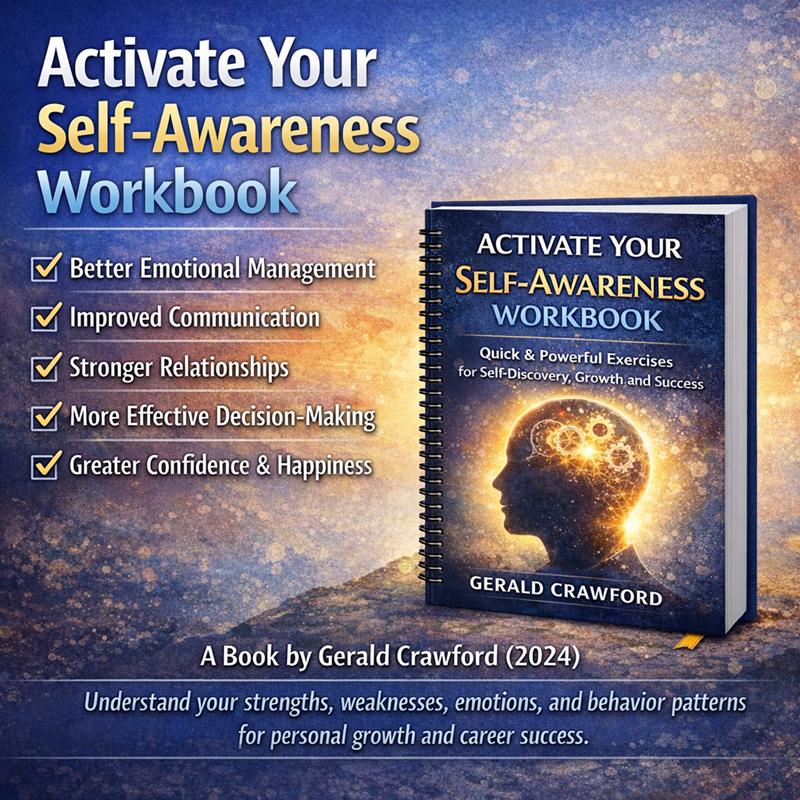
This version works for individual learning, group facilitation, coaching, therapy, or workshops and aligns cleanly with the EFT Teaching & Education Model and Activate Your Self-awareness Workbook.
Self-awareness Teaching and Education Model (EFT Model)
Module 1 (1 of 14): Awakening Self-Awareness
Theme
Becoming conscious of self
Purpose of Module 1
This opening module sets the emotional and psychological foundation for the entire 14-module journey.
The goal is not change yet — the goal is awareness without judgment.
Nothing is fixed. Nothing is forced.
We begin by learning how to notice.
Learning Focus (Expanded)
1. What Self-Awareness Really Is
Learners explore the difference between:
-
Awareness vs self-criticism
-
Observation vs judgment
-
Curiosity vs control
Key teaching point:
Self-awareness is the ability to notice thoughts, emotions, sensations, and behaviours without trying to fix, change, or suppress them.
Learners are guided to understand that:
-
Awareness creates space
-
Space creates choice
-
Choice creates change (later)
2. Shifting from Autopilot to Conscious Living
Learners explore how much of life is lived:
-
Reactively
-
Habitually
-
Emotionally unconsciously
Examples explored:
-
Automatic emotional reactions
-
Repetitive behaviour patterns
-
Unconscious self-talk
Key insight:
You cannot change what you are not aware of — and you do not need to change what you can lovingly observe.
EFT Focus (Expanded)
1. Tapping on Resistance to Self-Observation
Many people resist awareness because it feels:
-
Unsafe
-
Uncomfortable
-
Overwhelming
-
Threatening to identity
This resistance is normal and protective.
EFT is used to:
-
Reduce fear around looking inward
-
Create emotional safety
-
Calm the nervous system
2. Creating Safety in Looking Inward
Learners are taught:
-
You are not here to judge yourself
-
You are not here to relive trauma
-
You are here to observe with kindness
Safety is the priority — awareness happens at the pace of the nervous system.
Key Outcomes (Expanded)
By the end of Module 1, the learner:
✔ Understands what self-awareness truly means
✔ Recognises unconscious patterns without self-blame
✔ Notices when they are on “autopilot”
✔ Establishes a gentle intention for the journey
✔ Feels emotionally safe to continue
Practice Section (Facilitator-Ready)
EFT Tapping Round – “I Am Willing to Notice Myself”
Setup Statement (Karate Chop):
“Even though I’m not used to noticing myself, and part of me feels uncomfortable doing this, I choose to be open, curious, and kind toward myself.”
(Repeat 3 times)
Tapping Points (Short Phrases):
-
Eyebrow: I’m learning to notice myself
-
Side of Eye: Without judgment
-
Under Eye: Without trying to fix anything
-
Under Nose: Just observing
-
Chin: Becoming aware
-
Collarbone: At my own pace
-
Under Arm: I choose safety and curiosity
-
Top of Head: I am willing to notice myself
Closing Breath:
Slow inhale… slow exhale… notice what you feel.
Awareness Journaling (Guided)
Learners are invited to journal without analysing or correcting.
Prompts:
-
What did I notice about myself today?
-
What thoughts or emotions showed up most strongly?
-
Where do I notice myself reacting automatically?
-
What happens when I simply observe without judging?
-
What intention do I set for this journey of self-awareness?
Important instruction:
There are no right or wrong answers. Awareness is enough.
Facilitator Notes (Optional but Powerful)
-
Normalise discomfort — it means awareness is awakening
-
Gently redirect self-criticism back to observation
-
Emphasise kindness over insight
-
Remind learners: You are not broken — you are becoming conscious
Integration for Daily Life (Simple)
For the next few days, learners practise:
-
Pausing once a day and asking:
“What am I noticing right now?” -
No fixing
-
No analysing
-
Just noticing
Core Message of Module 1
Self-awareness begins the moment you stop judging yourself and start noticing yourself.



Leave a Reply