
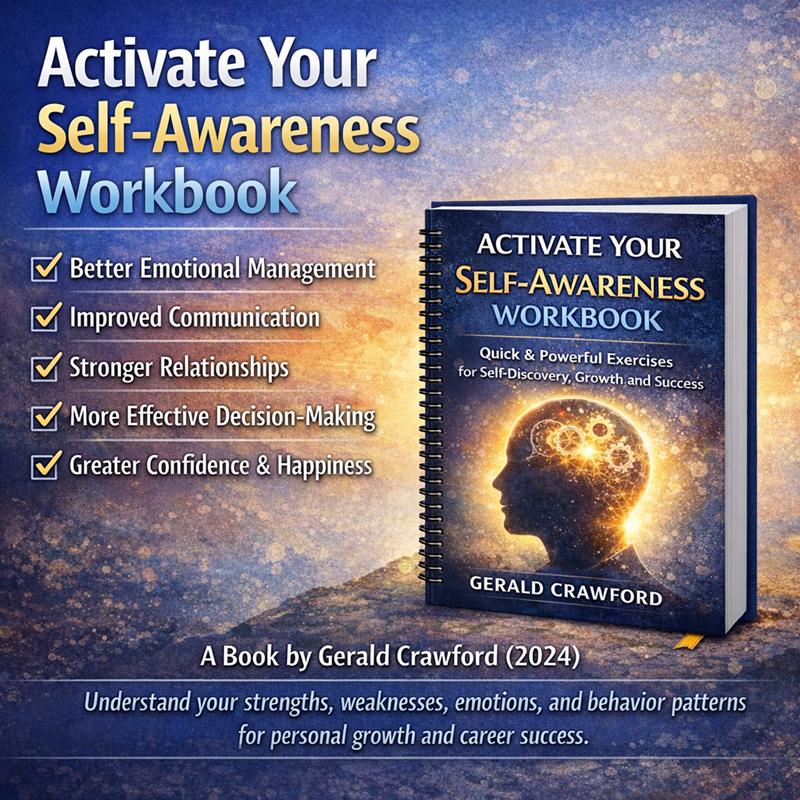
Activating self-awareness leads to better emotional management, improved communication, stronger relationships, more effective decision-making, increased confidence, greater personal happiness, and enhanced career success by helping you understand your strengths, weaknesses, emotions, and patterns of behavior.

Category: 111 Activate Your Self-awareness (Page 13 of 31)

Develop greater Personal Happiness with Self-awareness.

Happiness is not something you chase.
It is something you cultivate through self-awareness.

When you understand your needs, values, emotional patterns, and purpose, you stop outsourcing happiness to circumstances — and start building it from within.

Here is a practical framework for developing deeper, more stable personal happiness.


Understand What Truly Makes You Happy

Many people pursue happiness based on social expectations rather than self-knowledge.

Ask yourself:

  • What genuinely energizes me?

  • When do I feel most aligned and fulfilled?

  • Am I living according to my values or others’ expectations?

Self-awareness prevents you from chasing success that does not satisfy you.


Identify Emotional Patterns That Block Happiness

Unexamined patterns often sabotage joy:

  • Overthinking

  • Perfectionism

  • Comparison

  • People-pleasing

  • Avoidance of conflict

Research in emotional intelligence popularized by Daniel Goleman highlights how awareness of emotional triggers strengthens well-being and resilience.

Ask:

  • What thought patterns repeatedly lower my mood?

  • What beliefs about myself limit my happiness?

You cannot heal what you do not acknowledge.


Practice Emotional Regulation

Happiness is not constant pleasure — it is emotional balance.

Self-aware individuals:

  • Notice rising stress early.

  • Pause before reacting.

  • Use breathing, reflection, or journaling to reset.

Stability creates space for joy.


Align Daily Life with Core Values

Happiness increases when your actions reflect who you truly are.

Ask:

  • Am I spending time on what matters most?

  • Are my relationships aligned with my values?

  • Does my work reflect my purpose?

Misalignment creates internal conflict.
Alignment creates peace.


Strengthen Gratitude and Perspective

Self-awareness expands perspective.

Daily practice:

  • Identify three things you are grateful for.

  • Reflect on challenges that strengthened you.

  • Notice small moments of joy.

Gratitude shifts attention from lack to abundance.


Take Responsibility for Your Emotional Climate

Personal happiness grows when you stop blaming circumstances.

Self-aware happiness includes:

  • Owning your reactions.

  • Setting healthy boundaries.

  • Choosing environments that support growth.

  • Seeking help when needed.

You cannot control everything.
But you can control how you respond.


Happiness Growth Formula

Self-Awareness → Emotional Clarity → Value Alignment → Gratitude → Intentional Living

Without self-awareness, happiness is temporary and external.
With self-awareness, happiness becomes steady and internally grounded.

Improve your Decision-making with Self-awareness.

Every decision you make is filtered through your emotions, beliefs, fears, and past experiences.
Self-awareness helps you see those filters clearly — so you choose wisely instead of impulsively.

Strong decision-makers are not simply logical. They are emotionally intelligent and internally aligned.


Know What Is Driving the Decision

Before deciding, ask:

  • Am I choosing from fear or confidence?

  • Am I trying to avoid discomfort?

  • Am I reacting to pressure?

  • What emotion is strongest right now?

Research on emotional intelligence popularized by Daniel Goleman highlights that self-awareness reduces emotionally hijacked decisions.

When emotions are unexamined, they silently control choices.


Separate Facts from Feelings

Self-aware decision-making requires clarity:

  • Facts: What is objectively true?

  • Feelings: What am I experiencing internally?

  • Stories: What assumptions am I adding?

Example:

  • Fact: “The proposal has risks.”

  • Feeling: “I feel uncertain.”

  • Story: “If this fails, I will look incompetent.”

Clarity reduces anxiety-driven choices.


Identify Your Biases and Patterns

Everyone has decision patterns:

  • Avoidance

  • Overthinking

  • People-pleasing

  • Control

  • Impulsiveness

Ask:

  • Do I rush decisions to relieve anxiety?

  • Do I delay decisions to avoid responsibility?

  • Do I choose what others expect instead of what aligns with me?

Awareness of patterns prevents repetition of mistakes.


Align Decisions with Values

Self-awareness strengthens value-based leadership.

Ask:

  • Does this decision align with my core values?

  • Will I respect myself after choosing this?

  • Does this serve short-term comfort or long-term growth?

Values create stability when emotions fluctuate.


Use the Pause Principle

Powerful decisions often follow reflection, not reaction.

The 4-Step Pause Method:

  1. Breathe.

  2. Name your emotion.

  3. Clarify your intention.

  4. Choose consciously.

Space between stimulus and response is where wisdom lives.


Accept Responsibility for Outcomes

Self-aware individuals:

  • Own their choices.

  • Learn from consequences.

  • Adjust without self-condemnation.

  • Avoid blaming others.

Decision-making maturity is built through reflection, not perfection.


Decision-Making Growth Formula

Self-Awareness → Emotional Clarity → Value Alignment → Intentional Action → Accountability

Without self-awareness, decisions are reactive.
With self-awareness, decisions are strategic and aligned.

« Older posts Newer posts »

Step-up and get your seat on my VIP Activate Your Self-awareness Mentorship Program for 2026

X
Back a Buddy Show your Support