This is a core identity module – where awareness turns inward and learners begin to separate who they are from who they learned to be.
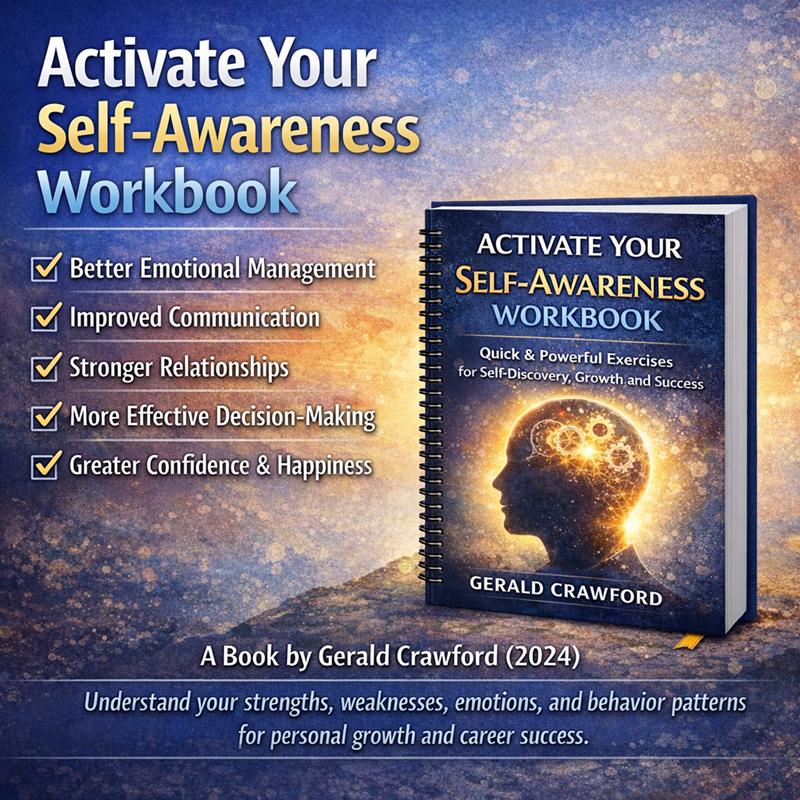
Below is Module 5 fully expanded, facilitator-ready, and consistent with Modules 1–4, aligned with the EFT Teaching & Education Model and Activate Your Self-awareness Workbook.
Self-awareness Teaching and Education Model (EFT Model)
Module 5 (5 of 14): Self-Beliefs & Identity
Theme
Who am I really?
Purpose of Module 5
By this stage, learners understand:
-
How they think (Module 2)
-
How they feel (Module 3)
-
Why they react (Module 4)
Now they explore the identity underneath it all.
This module helps learners recognise that many struggles are not about emotions or situations — they are about beliefs formed long ago about who they are.
When identity beliefs shift, behaviour and emotions follow naturally.
Learning Focus (Expanded)
1. Core Beliefs & Identity Formation
Learners explore how identity is formed through:
-
Early experiences
-
Family roles
-
Cultural expectations
-
Repeated emotional experiences
They are introduced to core identity beliefs, such as:
-
“I am not enough”
-
“I must please others to be loved”
-
“I am too much”
-
“I don’t belong”
-
“I have to be strong”
Key teaching points:
-
Beliefs are learned, not facts
-
Beliefs feel true because they were repeated
-
Identity beliefs operate unconsciously
You don’t react to life — you react from your beliefs about yourself.
2. False Self vs Authentic Self
Learners are gently introduced to the concept of:
-
False Self: the adapted identity created for safety, approval, or survival
-
Authentic Self: the natural self beneath conditioning
False self patterns may include:
-
People-pleasing
-
Perfectionism
-
Overachieving
-
Emotional suppression
-
Self-doubt
Important reframe:
The false self is not wrong — it protected you when you needed it.
Authenticity is not something to create — it is something to remember.
EFT Focus (Expanded)
Releasing Limiting Identity Beliefs
EFT is used to gently loosen identity beliefs that no longer serve the learner.
Key principles:
-
We work with one belief at a time
-
We do not argue with the belief
-
We thank it for its protective role
EFT allows learners to:
-
Feel the emotional roots of the belief
-
Reduce shame and fear
-
Create space for a new self-relationship
Key Outcomes (Expanded)
By the end of Module 5, the learner:
- Identifies key identity beliefs
- Understands where beliefs came from
- Separates self from belief
- Experiences increased self-confidence
- Feels more authentic and grounded
Practice Section (Facilitator-Ready)
Belief Identification Exercise
Learners are guided to reflect gently.
Prompts:
-
What do I believe about myself when I struggle?
-
What belief shows up when I make a mistake?
-
What belief shows up in relationships?
-
Whose voice does this belief sound like?
-
How has this belief tried to protect me?
Key reminder:
Awareness softens beliefs before change happens.
EFT Tapping – “I Am Not Enough” Narrative
(Adaptable to any identity belief)
Setup Statement (Karate Chop):
“Even though I’ve carried this belief that I am not enough, and it has shaped how I see myself, I choose to honour where it came from and open to a kinder truth about who I am.”
(Repeat 3 times)
Tapping Points (Short Phrases):
-
Eyebrow: This belief about me
-
Side of Eye: I learned it somewhere
-
Under Eye: It felt true for a long time
-
Under Nose: It tried to protect me
-
Chin: But I am more than this belief
-
Collarbone: I can question it now
-
Under Arm: Opening to self-acceptance
-
Top of Head: Choosing authenticity over fear
Integration Pause:
Invite learners to notice:
-
Does the belief feel lighter?
-
Is there more space or neutrality?
-
Is self-talk softer?
Facilitator Notes (Optional)
-
Move slowly — identity work is sensitive
-
Normalise emotional responses
-
Never force belief replacement
-
Emphasise curiosity over affirmation
-
Remind learners: You are not losing yourself — you are meeting yourself
Daily Integration Practice
For the next few days, learners practise:
-
Noticing identity language (“I am…”, “I always…”, “I never…”)
-
Gently adding:
“This is a belief, not a fact.” -
Placing a hand on the body when self-judgment arises
Small awareness shifts identity over time.
Core Message of Module 5
You are not your beliefs.
You are the awareness that can outgrow them.



Leave a Reply