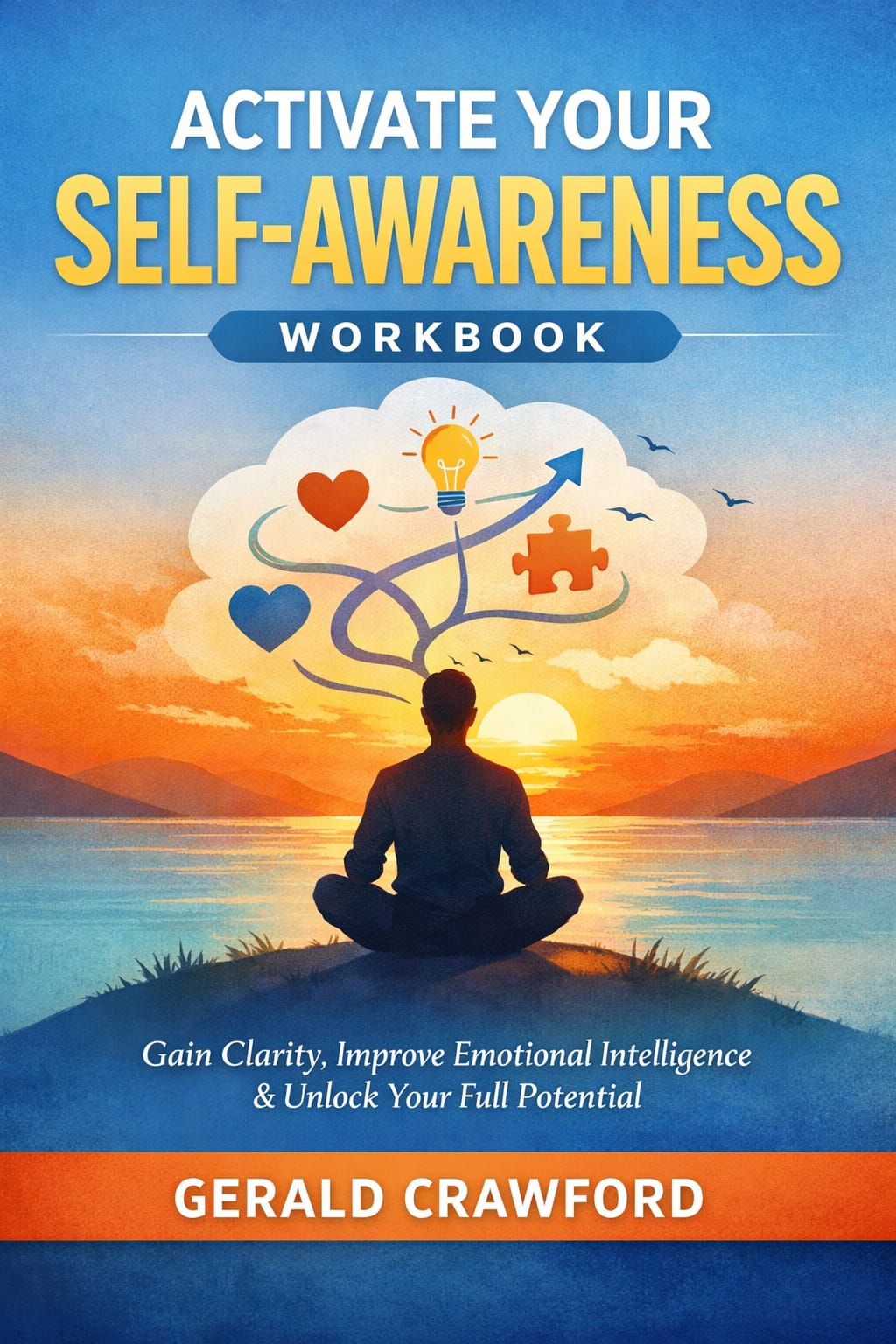
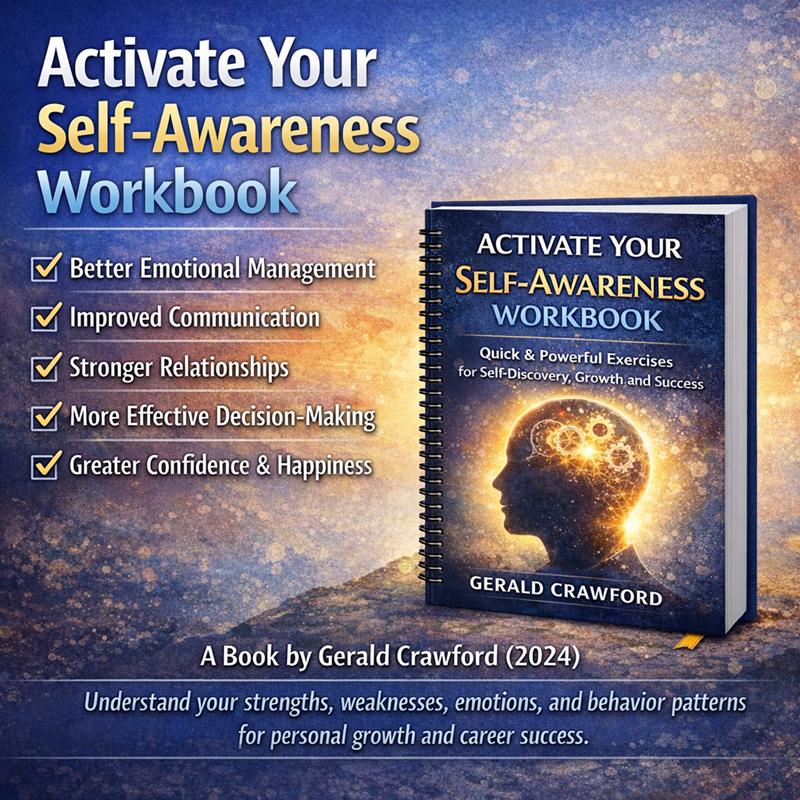
Activating self-awareness leads to better emotional management, improved communication, stronger relationships, more effective decision-making, increased confidence, greater personal happiness, and enhanced career success by helping you understand your strengths, weaknesses, emotions, and patterns of behavior.

Category: Activating Self-awareness (Page 3 of 15)

Recap of key takeaways and insights from the “Activate Your Self-awareness Workbook by Gerald Crawford”.

Recap of Key Takeaways and Insights from the “Activate Your Self-awareness Workbook by Gerald Crawford”

The “Activate Your Self-awareness Workbook” by Gerald Crawford is a comprehensive and transformative guide to cultivating self-awareness and unlocking your full potential. Here are the key takeaways and insights from the workbook:

Understanding Self-Awareness

* Self-awareness is the foundation of personal growth, well-being, and fulfillment.

* It involves developing a deeper understanding of your thoughts, feelings, values, and behaviors.

* Self-awareness is not just about intellectual understanding, but also about emotional and intuitive awareness.

The Importance of Mindfulness and Presence

* Mindfulness and presence are essential for developing self-awareness.

* They involve being fully engaged in the present moment, without judgment or distraction.

* Mindfulness and presence can help you cultivate a greater sense of calm, clarity, and inner peace.

Identifying and Challenging Limiting Beliefs and Patterns

* Limiting beliefs and patterns can hold you back from achieving your goals and living a fulfilling life.

* Identifying and challenging these beliefs and patterns is essential for personal growth and transformation.

* Self-awareness can help you recognize and overcome these limitations and develop more empowering beliefs and patterns.

Cultivating Self-Compassion and Self-Forgiveness

* Self-compassion and self-forgiveness are essential for developing a positive and supportive relationship with yourself.

* They involve treating yourself with kindness, understanding, and patience, especially when you make mistakes or encounter challenges.

* Self-compassion and self-forgiveness can help you develop a greater sense of self-worth and self-acceptance.

Building Positive Relationships and Communication Skills

* Positive relationships and effective communication are essential for personal and professional success.

* Self-awareness can help you develop healthier and more fulfilling relationships by understanding your own needs, boundaries, and communication style.

* Effective communication involves active listening, empathy, and assertiveness.

Embracing Emotional Intelligence and Intuition

* Emotional intelligence and intuition are vital for making informed decisions, navigating complex situations, and developing deeper relationships.

* Self-awareness can help you tune into your emotions and intuition, and develop a greater sense of trust and confidence in your inner wisdom.

Developing a Growth Mindset and Resilience

* A growth mindset and resilience are essential for overcoming obstacles, adapting to change, and achieving long-term success.

* Self-awareness can help you develop a growth mindset by recognizing your strengths, weaknesses, and areas for improvement.

* Resilience involves developing coping strategies, learning from failures, and maintaining a positive outlook in the face of challenges.

Integrating Self-Awareness into Daily Life

* Self-awareness is not just a theoretical concept, but a practical tool for living a more authentic, meaningful, and fulfilling life.

* Integrating self-awareness into daily life involves cultivating mindfulness, presence, and self-compassion in your daily activities, relationships, and decisions.

* Self-awareness can help you develop a greater sense of purpose, direction, and fulfillment in your life and career.

Visit https://self-awareness.co.za/ to Learn More

The “Activate Your Self-awareness Workbook” by Gerald Crawford is a valuable resource for anyone seeking to develop greater self-awareness, personal growth, and fulfillment. Visit https://self-awareness.co.za/ to learn more about the workbook, access additional resources, and start your journey to greater self-awareness and empowerment.

Chapter 14: Workbook Questions and Answers – Sustaining Spiritual Growth and Self-Awareness

Here are 10 workbook questions and answers for students about sustaining spiritual growth and self-awareness:

Q1: What are some common challenges that people face in sustaining spiritual growth and self-awareness, and how can we overcome them?

A1: Common challenges that people face in sustaining spiritual growth and self-awareness include feeling stuck or plateaued, struggling with self-doubt or criticism, and facing external obstacles or distractions. We can overcome these challenges by practicing self-compassion and self-awareness, seeking out supportive relationships and communities, and staying committed to our spiritual practices and values.

Q2: How can we cultivate a sense of discipline and commitment to our spiritual practice, and what are some strategies for maintaining a consistent routine?

A2: We can cultivate a sense of discipline and commitment to our spiritual practice by setting clear intentions and goals, creating a schedule and sticking to it, and finding ways to make our practice enjoyable and engaging. Strategies for maintaining a consistent routine include starting small and building gradually, finding a spiritual buddy or accountability partner, and tracking our progress and celebrating our successes.

Q3: What is the importance of self-reflection and self-awareness in sustaining spiritual growth and self-awareness, and how can we cultivate these qualities?

A3: Self-reflection and self-awareness are essential in sustaining spiritual growth and self-awareness because they help us to identify areas for growth and improvement, and to stay aligned with our values and intentions. We can cultivate self-reflection and self-awareness by practicing mindfulness and meditation, seeking out feedback and guidance from others, and taking time for regular self-reflection and journaling.

Q4: How can we balance our spiritual growth and self-awareness with our responsibilities and obligations in the world, and what are some strategies for managing our time and energy?

A4: We can balance our spiritual growth and self-awareness with our responsibilities and obligations in the world by prioritizing our time and energy, setting clear boundaries, and seeking out support from spiritual communities or mentors. Strategies for managing our time and energy include scheduling time for spiritual practice, taking breaks and practicing self-care, and learning to say “no” to non-essential commitments.

Q5: What is the role of community and support in sustaining spiritual growth and self-awareness, and how can we find and nurture these relationships?

A5: Community and support play a vital role in sustaining spiritual growth and self-awareness because they provide a sense of belonging and connection, and offer opportunities for growth and learning. We can find and nurture these relationships by attending spiritual events and gatherings, joining online communities or forums, and seeking out spiritual friends or mentors.

Q6: How can we navigate times of darkness or uncertainty on our spiritual journey, and what are some strategies for staying grounded and centered?

A6: We can navigate times of darkness or uncertainty on our spiritual journey by practicing self-compassion and self-care, seeking out support from spiritual communities or mentors, and staying connected to our spiritual values and principles. Strategies for staying grounded and centered include practicing mindfulness and meditation, engaging in physical activity or creative expression, and seeking out nature or other sources of comfort and inspiration.

Q7: What is the importance of patience and perseverance in sustaining spiritual growth and self-awareness, and how can we cultivate these qualities?

A7: Patience and perseverance are essential in sustaining spiritual growth and self-awareness because they help us to stay committed to our practice and to trust in the process of growth and transformation. We can cultivate patience and perseverance by practicing mindfulness and self-reflection, setting realistic expectations and goals, and celebrating our small wins and successes along the way.

Q8: How can we integrate our spiritual growth and self-awareness into our daily life and relationships, and what are some strategies for sharing our spiritual values and practices with others?

A8: We can integrate our spiritual growth and self-awareness into our daily life and relationships by practicing mindfulness and self-awareness in our interactions with others, sharing our spiritual values and practices with others, and seeking out opportunities for service and giving. Strategies for sharing our spiritual values and practices with others include setting clear boundaries and being respectful of others’ beliefs and perspectives, sharing our story and experiences with others, and inviting others to join us in spiritual practice or community.

Q9: What is the role of forgiveness and letting go in sustaining spiritual growth and self-awareness, and how can we cultivate these qualities?

A9: Forgiveness and letting go are essential in sustaining spiritual growth and self-awareness because they help us to release attachment to negative patterns and emotions, and to stay open to new experiences and perspectives. We can cultivate forgiveness and letting go by practicing self-compassion and self-awareness, seeking out supportive relationships and communities, and engaging in practices such as meditation, journaling, or creative expression.

Q10: How can we continue to deepen and grow in our spiritual practice over time, and what are some strategies for maintaining a lifelong commitment to spiritual growth and self-awareness?

A10: We can continue to deepen and grow in our spiritual practice over time by staying committed to our practice, seeking out new challenges and opportunities, and staying open to new experiences and perspectives. Strategies for maintaining a lifelong commitment to spiritual growth and self-awareness include setting clear intentions and goals, finding a spiritual community or mentor, and celebrating our progress and successes along the way.

« Older posts Newer posts »
Back a Buddy Show your Support