
Below is a more detailed, radio-friendly version of the same 10 interview questions, with answers expanded to 30–45 seconds each.
They remain clear, conversational, and easy to deliver live, without sounding scripted.
Radio Interview Q&A – Extended Answers
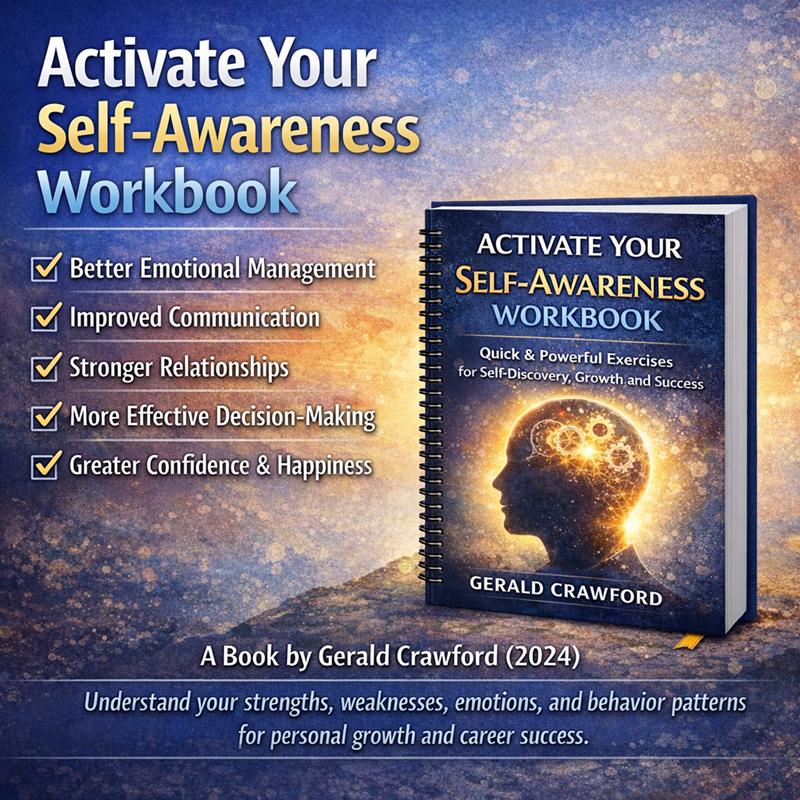
Activate Your Self-awareness Workbook
1. What is self-awareness, really?
Self-awareness is the ability to notice what’s happening inside you — your emotions, thoughts, reactions, and patterns — while they’re happening. Most people think awareness is about thinking more, but it’s actually about noticing more. When you’re self-aware, you recognise what’s driving you internally, which means you’re no longer unconsciously controlled by it.
2. Why do most people struggle with self-awareness?
Because we’re trained to function, perform, and cope — not to reflect. From a young age, we learn to push through emotions rather than understand them. Over time, we normalise stress, reactivity, and emotional patterns, so they feel like “just who I am,” instead of something we can become aware of and work with.
3. How does self-awareness improve emotional management?
When you become aware of an emotion early, it doesn’t have to escalate. Awareness gives you a pause — and that pause changes everything. Instead of suppressing emotions or being overwhelmed by them, you start recognising them as signals. That allows your nervous system to regulate naturally rather than staying stuck in reaction.
4. What impact does self-awareness have on relationships?
It’s huge. Most relationship conflict isn’t about what’s happening now — it’s about emotional patterns being triggered. When you’re self-aware, you recognise your triggers, expectations, and projections. That means you stop reacting defensively and start communicating more honestly, calmly, and responsibly.
5. How is this workbook different from other self-help books?
Most self-help books tell you what to do. This workbook helps you see what’s already happening. It’s practical and reflective — designed to build insight, not dependence on advice. When you see your patterns clearly, change happens naturally, without forcing yourself to be different.
6. Can self-awareness really improve confidence?
Absolutely. Confidence doesn’t come from positive thinking — it comes from self-trust. When you understand your emotions, limits, values, and reactions, you stop doubting yourself constantly. You’re no longer trying to be someone else or prove your worth, which creates a grounded, authentic confidence.
7. How does self-awareness affect decision-making?
Self-awareness helps you recognise what’s actually driving a decision — fear, habit, emotional conditioning, or true alignment. Once you see that clearly, decision-making becomes calmer and more confident. You’re no longer reacting to pressure or urgency; you’re choosing based on clarity.
8. Who is this workbook really for?
It’s for people who feel stuck in patterns — emotionally, relationally, or professionally. People who are tired of reacting, overthinking, or feeling overwhelmed, and who want clarity rather than quick fixes. It’s also useful for leaders, professionals, and anyone interested in emotional intelligence.
9. What changes do readers usually notice first?
The first changes are subtle but powerful: less emotional reactivity, clearer communication, and a greater sense of inner calm. Many people say they respond differently without trying so hard — because awareness shifts behaviour naturally, without forcing change.
10. What’s the core message of the book?
You don’t need to fix yourself. You need to understand yourself. When awareness grows, emotional patterns lose their grip, relationships improve, decisions become clearer, and confidence grows organically. Awareness is the foundation that makes all other growth possible.
Radio Close (Optional)
Activate Your Self-awareness Workbook is available at
https://self-awareness.co.za



Recent Comments